What are managed print services?
December 17, 2025
Go back to "News & Updates"
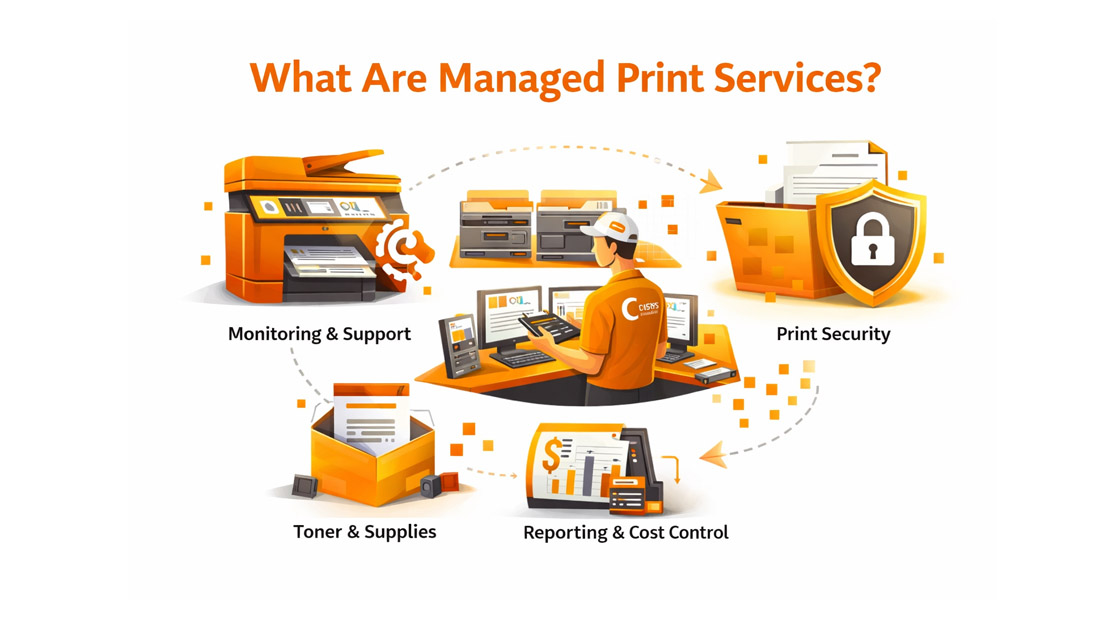
Printing is still a critical business function, but for many organizations it’s also a source of hidden costs, downtime, and security risk. Printers break, supplies run out, drivers conflict, and sensitive documents sit unattended on output trays.
This leads many businesses to ask: What are managed print services, and why do companies use them?
This article explains what managed print services are, how they work, what’s included, and how they help organizations reduce costs, improve reliability, and strengthen security.
1. What are managed print services?
Managed Print Services (MPS) is a solution where a third-party provider manages, monitors, and optimizes an organization’s printing environment.
Instead of purchasing printers individually and handling toner, maintenance, repairs, and support internally, businesses outsource these responsibilities to a managed service provider.
Managed print services typically cover:
- Printers, copiers, and multifunction devices.
- Toner and consumable supply management.
- Maintenance, repairs, and device monitoring.
- Print security and access controls.
- Usage reporting and cost optimization.
The goal is to make printing predictable, efficient, and secure—without internal teams constantly troubleshooting devices.
2. How managed print services work
With managed print services, your provider takes responsibility for the full lifecycle of your printing environment.
Common steps include:
- Assessing your current printers, usage patterns, and costs.
- Standardizing devices to reduce complexity.
- Deploying monitoring software to track performance and supplies.
- Automatically shipping toner before it runs out.
- Providing support and repairs when issues arise.
Instead of reacting to printer failures, MPS focuses on proactive management and continuous improvement.
3. What’s included in managed print services?
While offerings vary by provider, most managed print services include the following components:
a) Device monitoring and management
- Real-time monitoring of printer status and health.
- Early detection of errors or failures.
- Remote troubleshooting where possible.
b) Supplies management
- Automatic toner and ink replenishment.
- Standardized consumables across devices.
- Elimination of emergency supply orders.
c) Maintenance and support
- On-site repairs and break-fix support.
- Preventive maintenance to reduce downtime.
- Vendor coordination handled by the provider.
d) Print security
- User authentication for print jobs.
- Secure print release to protect sensitive documents.
- Device hardening and firmware updates.
e) Reporting and cost control
- Detailed usage and cost reports.
- Insights into wasteful printing behavior.
- Recommendations for optimization and consolidation.
4. Managed print services vs traditional printer management
Many organizations manage printers reactively—fixing problems only after they disrupt work.
- Traditional printer management relies on internal staff, manual supply tracking, and ad-hoc repairs.
- Managed print services provide proactive monitoring, predictable costs, and centralized support.
Key differences include:
- Unexpected toner shortages vs automatic replenishment.
- Multiple printer models vs standardized devices.
- Security gaps vs controlled access and audit trails.
- Unclear costs vs transparent reporting.
MPS turns printing into a managed service instead of an ongoing operational headache.
5. Who should use managed print services?
Managed print services are ideal for organizations that:
- Operate multiple printers across offices or locations.
- Handle sensitive or regulated documents.
- Want to reduce printing-related IT support tickets.
- Need predictable printing costs.
- Are growing and want scalable infrastructure.
Industries such as accounting, healthcare, legal, education, and professional services commonly benefit from MPS.
6. Business benefits of managed print services
Key advantages include:
- Lower printing costs through consolidation and usage control.
- Reduced downtime with proactive monitoring and maintenance.
- Improved security for sensitive documents.
- Less burden on internal IT teams.
- Better visibility into printing habits and expenses.
Many organizations discover that printing costs drop significantly once waste and inefficiency are addressed.
7. How Klipsys Technologies delivers managed print services
Klipsys Technologies offers managed print services that simplify printing while improving reliability and security.
By standardizing devices, automating supply management, monitoring performance, and securing print workflows, Klipsys helps businesses control costs and eliminate printer-related disruptions.
Final thoughts
Managed print services are not just about printers—they’re about efficiency, security, and control.
For businesses that still rely on printed documents, MPS provides a structured, predictable approach that turns printing into a reliable service rather than a constant source of frustration.