Why Managed IT Services for Healthcare?
March 16, 2026
Go back to "News & Updates"
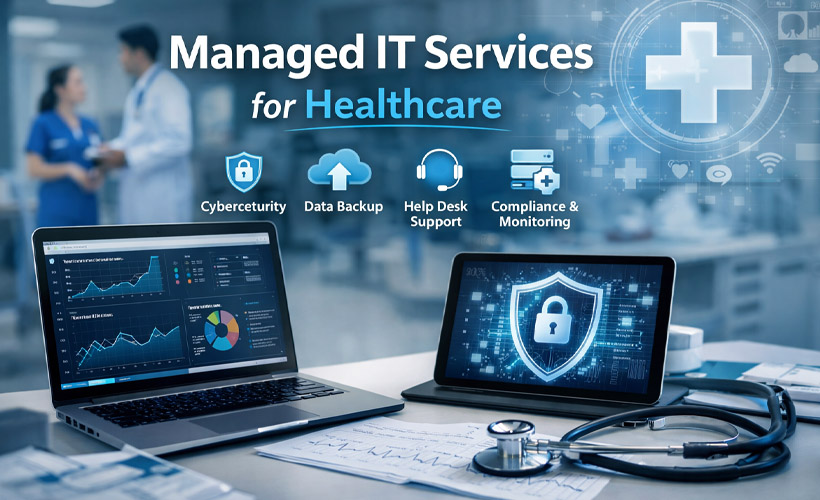
Healthcare organizations rely on technology every day to deliver safe, timely, and efficient patient care. From electronic health records and secure communication platforms to scheduling systems, imaging software, and billing tools, even small IT issues can create major disruptions.
That is why many providers ask: How can managed IT services support healthcare operations while protecting sensitive data and reducing downtime?
This article explains what managed IT services for healthcare include, why specialized support matters, and how the right IT partner can help medical organizations improve security, performance, and long-term stability.
1. What are managed IT services for healthcare?
Managed IT services for healthcare are outsourced technology services designed to support the unique needs of medical practices, clinics, specialty providers, and healthcare organizations.
Instead of only responding when something breaks, a managed IT provider proactively monitors, maintains, secures, and supports the organization’s technology environment on an ongoing basis.
This often includes help desk support, network management, cybersecurity, data backup, cloud services, software updates, and strategic IT planning.
2. Why healthcare organizations need specialized IT support
Healthcare environments depend on stable, secure systems to keep operations moving and support quality patient care. A generic IT approach is often not enough because healthcare organizations handle sensitive data, use specialized applications, and operate in fast-paced settings where delays can have serious consequences.
Managed IT services for healthcare are built around these realities. They help organizations reduce risk, improve reliability, and create a more efficient technology environment for both clinical and administrative teams.
With the right support, staff can spend less time dealing with technical issues and more time focusing on patients.
3. Security is a major priority in healthcare IT
Cybersecurity is one of the biggest concerns in the healthcare industry. Medical organizations are common targets for ransomware, phishing attacks, data breaches, and other threats because patient and financial data are highly valuable.
Managed IT services help strengthen security through proactive monitoring, endpoint protection, firewalls, access controls, patch management, email security, and multi-factor authentication.
A strong healthcare IT strategy also includes better processes, staff awareness, and ongoing oversight to reduce vulnerabilities before they become major problems.
4. Reducing downtime in healthcare environments
In healthcare, downtime is more than an inconvenience. If providers lose access to patient records, scheduling tools, communication systems, or clinical software, the disruption can affect the entire organization.
Managed IT services reduce downtime by taking a proactive approach. Systems are monitored continuously, performance issues are identified early, and preventive maintenance helps resolve many problems before they impact operations.
This level of support is especially valuable for healthcare organizations that do not have the internal resources to manage and monitor technology around the clock.
5. Supporting compliance and best practices
Healthcare organizations must take compliance seriously, especially when handling protected health information and other sensitive data.
Managed IT services can help support compliance goals by improving system security, strengthening access controls, maintaining backup procedures, and helping organizations follow technology best practices.
While compliance is not a one-time task, the right IT partner can help make it more manageable through consistent oversight and a more secure operational foundation.
6. Cloud solutions for modern healthcare providers
Many healthcare organizations are adopting cloud-based tools to improve flexibility, scalability, and collaboration. Cloud solutions can support secure file access, hosted applications, backups, and communication across multiple locations.
Managed IT services help healthcare providers move to the cloud in a way that is secure and well planned. This includes evaluating platforms, managing migrations, configuring access, and providing ongoing support after implementation.
For growing practices and distributed teams, cloud services can make it easier to stay connected and productive without sacrificing security.
7. Help desk support for busy healthcare teams
Doctors, nurses, administrators, and billing staff should not have to spend valuable time troubleshooting technology issues. When a problem occurs, they need fast and dependable support.
Managed IT services provide responsive help desk support for issues such as login problems, device errors, printing issues, software questions, and connectivity concerns.
Fast issue resolution improves productivity, reduces frustration, and helps healthcare teams maintain smoother daily operations.
8. Backup, disaster recovery, and business continuity
Healthcare organizations need to be prepared for unexpected disruptions such as cyberattacks, hardware failures, power outages, and data loss incidents.
Managed IT services often include backup and disaster recovery planning to help ensure data is protected and systems can be restored as quickly as possible when something goes wrong.
A strong recovery strategy helps healthcare providers reduce downtime, maintain continuity, and recover with less disruption during critical events.
9. Scalable IT support for growing healthcare practices
As healthcare organizations grow, their technology needs often become more complex. New employees, additional devices, expanding locations, and changing software needs all require planning and support.
Managed IT services provide scalable support that can grow alongside the organization. This makes it easier to handle expansion without falling behind on security, performance, or infrastructure needs.
Strategic IT guidance also helps healthcare providers make better long-term decisions as their operations evolve.
Final thoughts
Managed IT services for healthcare give medical organizations access to proactive support, stronger security, better system performance, and a more reliable technology foundation.
By working with an experienced IT partner, healthcare providers can reduce disruptions, protect sensitive information, support compliance efforts, and create a more efficient environment for both staff and patients.
For healthcare organizations looking to improve day-to-day operations and plan for future growth, managed IT services are a practical and valuable investment.